Our Company
has been the pioneer in solutions for the (mass) production of thermoplastic composite structures using laser-assisted tape deposition technology since 2003.
Introduction: A Technology Nobody Knew About—But Everyone Would Need
In 2000, Coert Kok visited a Boeing plant in St. Louis. What he saw there was not a mass-produced product, nor a mature process—but a promise: the laser-assisted fabrication of thermoplastic composite structures. A technology that hardly anyone in Europe knew about at the time, let alone used industrially.
Kok recognized the potential immediately. What followed was more than two decades of groundwork—technological, organizational, and entrepreneurial—that has culminated today in AFPT GmbH: the world’s leading manufacturer of machines for laser-assisted tape laying and winding of thermoplastic composites.
2003–2007: The Pioneering Phase—Establishing a Technology in Europe
Three years after his visit to Boeing, Coert Kok founded AFPT BV in the Netherlands in 2003 with a clear goal: to spread laser-assisted thermoplastic winding technology throughout Europe. At that time, Europe did not have a single commercial provider of this technology. The market for Automated Fiber Placement (AFP) was, at that point, almost entirely focused on thermoset materials—and concentrated in the U.S., where companies such as Electroimpact (founded in 1986) and Ingersoll Machine Tools were already supplying established AFP systems for the aerospace industry.
AFPT deliberately chose a different path: not thermosets, but thermoplastics. Not autoclaves, but in-situ consolidation. Not manual post-processing, but fully automated processes.
In 2004, Kok commissioned the Fraunhofer IPT in Aachen to develop a closed-loop control system for the laser technology—a crucial step toward precisely and reproducibly controlling the process temperature at the melting point. In 2006, Patrick Kölzer tested the first demonstration head for laser-assisted tape laying in Aachen. It proved that the technology worked.
In 2007, AFPT GmbH was founded in Dörth (Rhineland-Palatinate) by Patrick Kölzer, Coert Kok, and Frank Rittenbruch—now as a German company with a clear focus on mechanical engineering and process development.
2008–2013: From Research Machine to Industrial Application
In 2008, AFPT put its first in-house R&D machine into operation at the Dörth site. This marked the beginning of a systematic build-up of process expertise, which remains the foundation of AFPT technology to this day.
A decisive milestone followed in 2011: The first R&D machines were sold to research institutes in Europe. AFPT was now no longer just a developer, but a machine manufacturer. The technology left the company’s own laboratory and was transferred to university and industrial research environments—an important step toward legitimizing and spreading the process.
At the same time, the broader market began to take notice of thermoplastic AFP. Coriolis Composites from France—which launched in 1998 with the first AFP system for Airbus—worked intensively during this phase on systems for thermosetting materials before the company later added laser systems for thermoplastics to its portfolio. MIKROSAM from North Macedonia also developed modular AFP cells that were increasingly capable of processing thermoplastic tapes.
In 2012, AFPT developed the first innovative concepts for manufacturing pressure vessels—an application that demonstrated the potential of LATW technology for the oil and gas industry as well as later hydrogen applications.
A technological quantum leap followed in 2013: the first integration of multiple laser-assisted winding heads into a continuous-tube winding system. Multi-spindle systems enabled true mass-production speeds for the first time—a unique selling point that clearly set AFPT apart from competitors who continued to rely on single-head architectures.
2017–2022: From Prototype to Production Machine
The years 2017 and 2018 marked the transition from single-head to system solutions. In 2017, AFPT delivered turnkey projects for continuous winding machines for offshore applications—complete, turnkey production systems for demanding industrial customers. This was followed in 2018 by the first prototype of an automated winding system.
2020—a year associated with standstill for many industries—was a breakthrough for AFPT: The first automated production machines were sold to industrial partners. The technology had reached the level of maturity required for use in series production. At this point, other market players also began to intensify their laser AFP activities: Electroimpact introduced its Variable Spot Size Laser (VSSL) AFP technology, which promised a new level of precision for thermoplastic processing.
Finally, in 2022, AFPT took a strategically important step: the founding of Alformet GmbH to spin off the contract manufacturing business into an independent unit. The logic behind this is clear: AFPT remains a machine manufacturer and technology developer. Alformet assumes the role of manufacturing partner—leveraging privileged access to AFPT machines and process know-how to produce CFR-TP tubes and profiles for customers in the aerospace, automotive, and industrial sectors.
What sets AFPT apart from other AFP machine manufacturers?
AFPT is the only machine manufacturer that, since its founding, has specialized exclusively in laser-assisted in-situ consolidation of thermoplastic composites. While competitors such as Coriolis, Electroimpact, or MIKROSAM offer broad portfolios for thermoset and thermoplastic systems, AFPT has concentrated all of its process expertise, control loop technology, and mechanical engineering know-how on a single process—with the goal of making it controllable at an industrial scale. The result is a depth of technological expertise that is unmatched in the market.
Conclusion: 25 Years of Persuasion—and a Market That Is Finally Ready
AFPT’s story is not a classic startup story. It is the story of a technological conviction that has swum against the tide for over two decades—in an industry that long considered autoclaves and thermosets to be without alternative.
Today, as sustainability, recyclability, and production efficiency become decisive competitive factors, the market is ready for what AFPT has been building from the very beginning: a fully automated, autoclave-free production of continuous-fiber-reinforced thermoplastic structures with integrated online quality control.
For companies that now want to invest in thermoplastic composite structures without having to set up their own production line, Alformet—as an AFPT subsidiary—offers direct access to this technology—as a manufacturing partner, not as a machine builder.

Alformet GmbH founded to take over AFPT's contract production business
First automated production machines sold to industrial partners
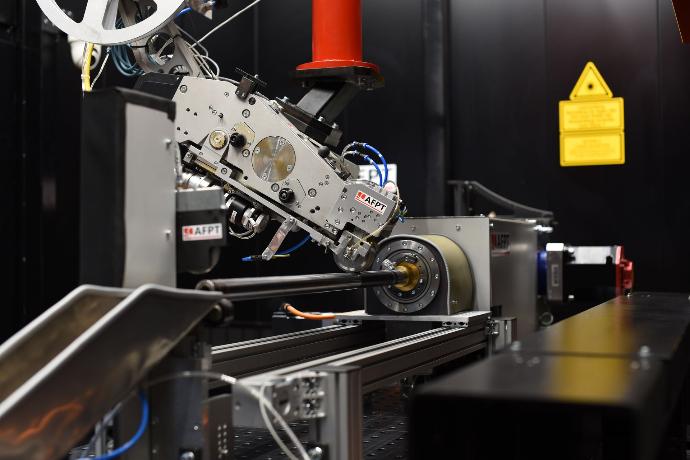
First prototype for automated winding system developed
Turnkey projects for further endless winding machines for offshore applications delivered
First integration of multiple laser-assisted winding heads in an endless pipe winding system
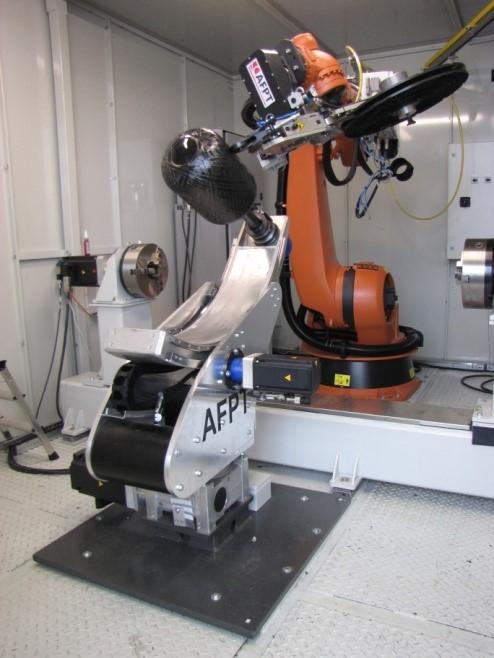
First innovative concepts to produce pressure vessels developed
First R&D machines sold to research institutions in Europe
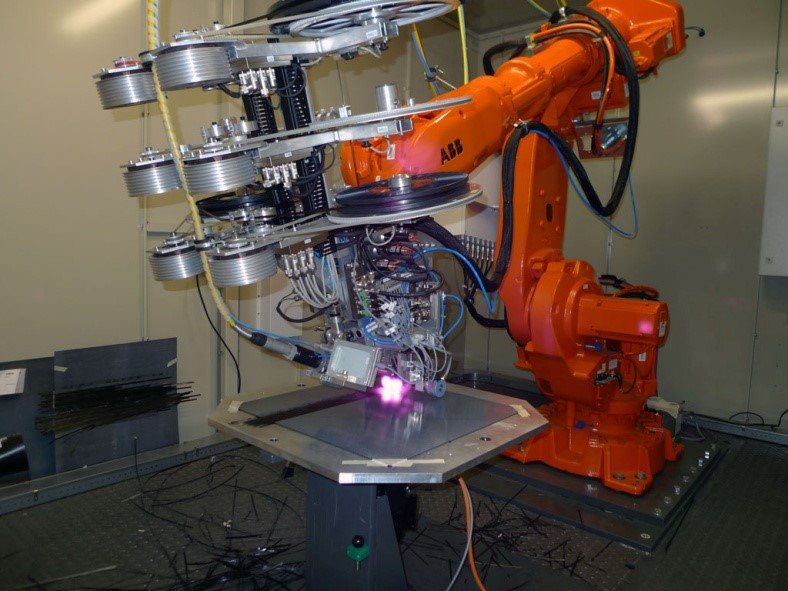
First R&D Machine operational at AFPT
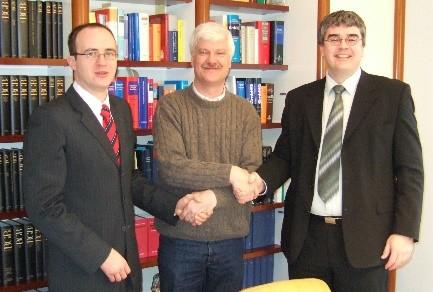
AFPT GmbH founded by Patrick Kölzer, Coert Kok and Frank Rittenbruch in Dörth, Germany
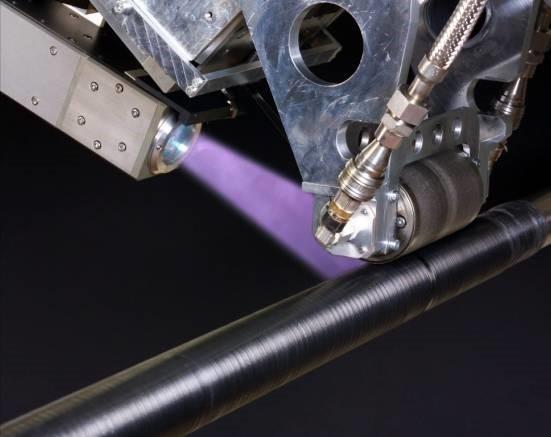
First demontration head tested in Aachen by Patrick Kölzer
Fraunhofer IPT in Aachen, Germany is contracted to develop a closed-loop control system for the technology
AFPT BV is founded by Coert Kok in the Netherlands to seed the technology in Europe
Coert Kok visits the Boeing facility in St. Louis and is introduced to laser-assisted thermoplastic composite production.